



When it comes to legendary shoot-’em-ups, the name Ikaruga almost always comes up. Originally released in Japanese arcades in 2001, it later found a loyal fan base on consoles like the Dreamcast, GameCube, Xbox 360, Nintendo Switch, and PC. The game comes from Treasure, a studio known for creative but also brutally challenging action games. Ikaruga is not just a simple blast-fest – it’s more like the “Dark Souls” of shoot-’em-ups, only in 2D and with lasers instead of swords. In my review I’m sharing my thoughts with you.
Black and White – The Brilliant Polarity System
What sets Ikaruga apart from other games in the genre is the so-called Polarity System. Your ship can switch between two colors: black and white. When you switch to black, you are immune to black bullets and even absorb them to charge a powerful smart bomb attack. The same goes for white – only for white bullets.
Sounds simple? Sure – until you’re standing in the middle of a bullet storm and your brain has to switch between black and white every second. Because while you’re trying to “eat” enemy bullets, you also have to make sure you’re hitting enemies of the opposite color to deal maximum damage. This creates a constant balancing act between defense and offense.
And that’s where the magic happens: Ikaruga is not mindless, constant shooting. It’s a strategic bullet puzzle where you’re basically playing chess in your head – only at light speed.
Also interesting: Animal Well Review
Level Design, Graphics, and Sound – Minimalistic but Full of Style
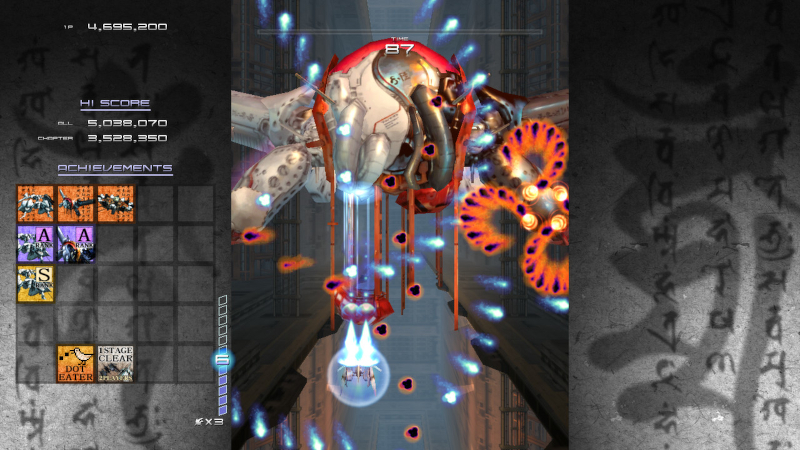
Visually, Ikaruga may be an oldie by now, but it has aged incredibly well. The black-and-white color scheme with occasional accents creates a timeless look. The levels are designed not only to look good but also to perfectly integrate with the Polarity System. Some sections even feel like a rhythmic puzzle where you dodge bullet patterns as if you were dancing – or absorbing them.
The soundtrack also deserves big praise. The music is epic and constantly pushes you forward, making you feel like you’re in a last, desperate war for the galaxy. Each stage has its own musical identity, ranging from dark and threatening to heroic and dramatic. Combined with the distinctive sound effects, it creates an almost hypnotic atmosphere.
Difficulty – Frustration or Flow?
Here’s the point where many players throw in the towel: the difficulty. Ikaruga is merciless. Mistakes are not forgiven, and often a split second of inattention is enough to ruin an entire stage. Beginners in particular will explode more than they will fly at first.
But that’s exactly the appeal. If you stick with it, you’ll experience that unmatched “flow” when everything clicks – when you perfectly switch between black and white, absorb bullets in split-second intervals, and wipe out enemies in droves. The game rewards precision and patience. On top of that, there’s a scoring system that rewards combo chains: if you shoot three enemies of the same color in a row, you get extra points. Sounds easy – but it’s not, especially under heavy fire.
For casual players, this can be intimidating, but hardcore fans love Ikaruga precisely for its steep learning curve. The game is fair, but unforgiving. Every mistake is on you, not on the game – is what I found out in my review.
A Milestone for Bullet Hell Fans
Ikaruga is not a game that holds your hand. It throws you straight into a bullet hell that will either make you despair or cheer. If you just want to “play a quick round,” you’ll probably quit in frustration. But if you embrace the mechanics, you’ll discover one of the smartest and most satisfying shoot-’em-ups ever made.
The brilliant Polarity System, the timeless look, the epic soundtrack, and the perfect mix of strategy and reflexes make Ikaruga still worth playing today. It’s a game that forces you to think through every move – while making split-second decisions.
